“If you’ve got a functioning pancreas, you’re playing on easier mode. If you don’t… you’re basically doing this with two hands tied behind your back.”
- Seun
Unsupported ultra racing is sold as a simple idea: ride your bike from A to B, don’t quit, and the rest will sort itself out.
Then you land somewhere like Morocco, the weather turns biblical, the resupply plan becomes “omelette, sardines, maybe a wafer biscuit”, and you realise the riding is only one part of the job.
For Seun, there’s another layer too: Type 1 diabetes. When your blood glucose management is as critical as your pacing, fuelling stops being “performance optimisation” and becomes basic risk management.
This is Seun's Atlas Mountain Race story - the lows, the learnings, and why not finishing can still be a win.

What you’ll learn
-
What the first 48 hours of the Atlas Mountain Race really felt like (spoiler: grim).
-
Why resupply is the hardest part of ultra bikepacking - not the terrain.
-
How Seun manages blood glucose when carb labels don’t exist.
-
The kit + fuelling lessons he’s taking into his next adventures.
The last 24 hours: forecast panic and a late start
The final day before the race wasn’t calm.
The forecast was coming in. People were apprehensive. The start time moved later, which basically guaranteed more time riding in rain at the beginning — never ideal.
But Seun’s take was very “ultra brain”:
You don’t negotiate with the weather. You just start, adapt, and see where it goes.
A night start, no food, and making do
Night starts sound romantic until you’re four hours deep into loitering around with hundreds of other cyclists and the one restaurant at the start line is cooked.
Food sold out. The option he ended up with wasn’t what he needed.
So he did the sensible thing: ate one of his own dehydrated meals pre-start — not glamorous, but it’s calories you can control.
This is a theme you’ll see again and again in ultra racing: control what you can, accept what you can’t.

Day one: rain, altitude, and an accidental power PB
The first day was bad - cold, wet, high altitude.
Seun ended up shivering in a hut with other riders just to warm up, then pushed on once they dropped off the highest section.
The irony? On that opening climb he accidentally hit a one-hour power PB.
Not because he was “feeling amazing” - but because in ultras your bike is heavy, your bags are full, and the gradient doesn’t care.
He also lost a bottle on a descent after hitting a pothole - a small mistake that can snowball quickly in a race where resupply gaps are huge.
Day two: wind that makes you question your life choices
If day one was uncomfortable, the wind was something else.
Seun described it as the grimmest part - the moment where you genuinely start thinking about safety rather than speed.
Sometimes the smartest move in the mountains is turning around. Ultra racing still requires judgement.
The plan (and what happens when the route ignores it)
Seun’s early target was roughly 190 km per day, and it worked for the first couple of days.
Then the conditions punched a hole in the plan:
-
Diversions
-
Massive headwinds
-
Big power output for tiny speed gains (hours of it)
That’s the ultra truth: you can write a plan in a spreadsheet, but the route will edit it.
If you’re building your own fuelling strategy for a multi-day ride, the best reference point is the [How to fuel for ultra-cycling] guide - because the key is never “one perfect plan”, it’s having options.
The turning point: reaching CP2, then the iPhone cable breaks
Seun pushed through to CP2, including a brutal long stint (he’s done 24-hour rides before, so he knew the territory).
But minutes before arriving, his iPhone cable broke.
In an unsupported race, that’s not a minor inconvenience. That’s navigation, safety, and logistics.
Yes, you can accept help - but it changes your status in the event. And Seun made a clear decision:
If he wasn’t chasing a result anymore, he wasn’t willing to risk health just to finish “outside the GC”.
So instead of forcing a broken situation, he reframed the experience — and bikepacked onwards with new mates, actually taking in the country rather than riding with his head down.
That’s a level of maturity a lot of people only learn after they’ve paid for it.

Type 1 diabetes in ultra racing: the extra job you never clock out of
This is where Seun’s story becomes bigger than the event.
Adrenaline can spike blood glucose
He explained how adrenaline/cortisol can push levels up early in a race - something he’s experienced before.
Resupply gets dangerous when carbs are unknown
For the first two days, he was fine because he’d started with a proper supply of sports nutrition plus whatever he could find in shops for “real food”.
Then the race got remote.
He described small wafer biscuits with unknown carb quantities - which turns fuelling into guesswork, and guesswork into risk when you’re also managing insulin.
This is exactly why many ultra riders lean on known-carb options early on - gels, drink mixes, rice bars - not because they’re “fancy”, but because they reduce thinking when your brain is already fried.
A simple example stack for predictable carbs:
-
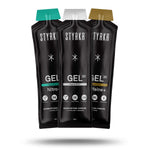
Higher-carb hits like [GEL50] when you need carbs fast (and you don’t want to chew).
-
Drinkable carbs like [MIX90] or [MIX60] when flavour fatigue kicks in or eating feels impossible.
-
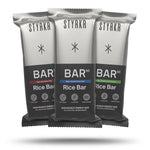
Solid carbs like [BAR50] when you want something more substantial in the first part of a stage.
If you’re newer to gels (or your stomach is), the Gut training article is worth a read before you try to go big on carbs in the wild.
The “tightrope” of going high vs going low
Seun described deliberately running slightly higher at times rather than risking a crash - because a hypo in the wrong place (deep into a climb, hours from help) is a different level of problem.
Important note: that’s his personal experience and decision-making from years of living with Type 1 diabetes - not a recommendation. Anyone with Type 1 diabetes should work with their clinician/diabetes team on strategies for endurance sport.
Fatigue vs low blood sugar: alarms + body cues
He relies on two things:
-
His insulin pump readings/alarms
-
Strong awareness of his own physical cues (hunger, dizziness, dehydration)
That awareness becomes a survival skill when you’re 12–15 hours into a remote section and “resupply” is a theory.
Maximalism, packing, and what he’d change
Seun owns his packing identity: bags full, every time.
Looking back, he felt he packed about right, but noted he could probably have gone lighter on the sleep system given conditions would warm after the Atlas range.
The bigger lesson wasn’t weight though - it was redundancy:
If there’s one item worth carrying twice in an unsupported race, it might be the one thing that keeps your phone alive.
What’s next
Seun’s already thinking forward - possibly Transcontinental Race (the road suits him, and resupply is more predictable).
If you’re curious about that event, the Transcontinental: the holy grail of ultra racing story is a good rabbit hole.
Closer to home, he’s got Mallorca 312, Sussex Mystery Tour, and maybe another ultra depending on the year’s logistics and budget.
Key takeaways
-
Ultra racing is a logistics problem disguised as a bike ride.
-
Weather and wind can blow up any pacing plan - adaptability wins.
-
Resupply is often harder than the terrain - especially when carb quantities are unknown.
-
For Type 1 diabetics, fuelling is not just “performance” - it’s risk management (and deserves respect).
-
Not finishing doesn’t mean failure. Sometimes it means you made the smartest decision available.